Friday, 25 November 2011

Utthan Rising

Last week we had the most wonderful opportunity of being partnered with a non-government organization (NGO) of our choosing and spending a couple days “in the field” with them to learn about the development work they are undertaking. I choose to be placed with the organization “Utthan” which means rising. Utthan’s work ranges from development in areas of agriculture, water and sanitation, livelihood issues, gender equality and empowerment, community building, conflict transformation and peace and security – to name just a few.


Wonderful book on Utthan's history by Ashoke Chatterjee


With our experience “in the field”, I had the great fortune of being placed in the “tribal” group which meant that myself, Meryl and Rupinder (one of my professors J) travelled out of the city of Ahmedabad to spend time with the tribal communities and Utthan offices in the countryside within the state of Gujarat.  Leaving early Friday morning on what turned out to be a 4-hour drive to our destination of Limkheda, it was so nice to be able to break out of the big cities that I have been staying in and see a whole different side of India.


Glimpses from the tribal communities


 Once we arrived in Limkheda and found our way to the Utthan Tribal Office, we were oriented by Babuhai who works with the organization and were taken even further out of our little village into the countryside of India. Entering into this type of area, I was immediately floored by the change of scenery. For the first time since arriving in India, I was experiencing the great pleasure of breathing in fresh air free from pollutants, and was completely in love with our green and lush surroundings which is a pretty incredible sight considering we were in one of the driest regions in India.


Utthan's Limkheda office


Water source for one of the tribal communities we visited

The tribal village we visited this first day was a wonderful entry point into understanding some of the initiatives Utthan is undertaking. What makes this organization so incredible is their participatory approach to development – they are not an implementation body for the government or any other type of sector; rather, Utthan works to understand what individuals in these communities need based on what they reveal are their own priorities and then provides support to the individuals themselves to realize and develop the resources and capacities available to improve their own livelihoods and circumstances. In the particular case of the first tribal community we visited, initiatives focused on the diversification of crops, protection of land against soil erosion and deforestation, as well as assisting in the provision of a clean and consistent water source.  


A pump to get water for the homes


Having the opportunity to meet with some of the families in this small community was such an eye-opening and humbling experience. One family was gracious enough to give us a tour of their home which was quite the experience because the home we toured through was made of cement, not mud like the others, and this signified their wealth, given that it was a permanent structure, so they were very proud to be showing us and welcoming us in.


Family outside their cement home they're gracious enough to give us a tour of

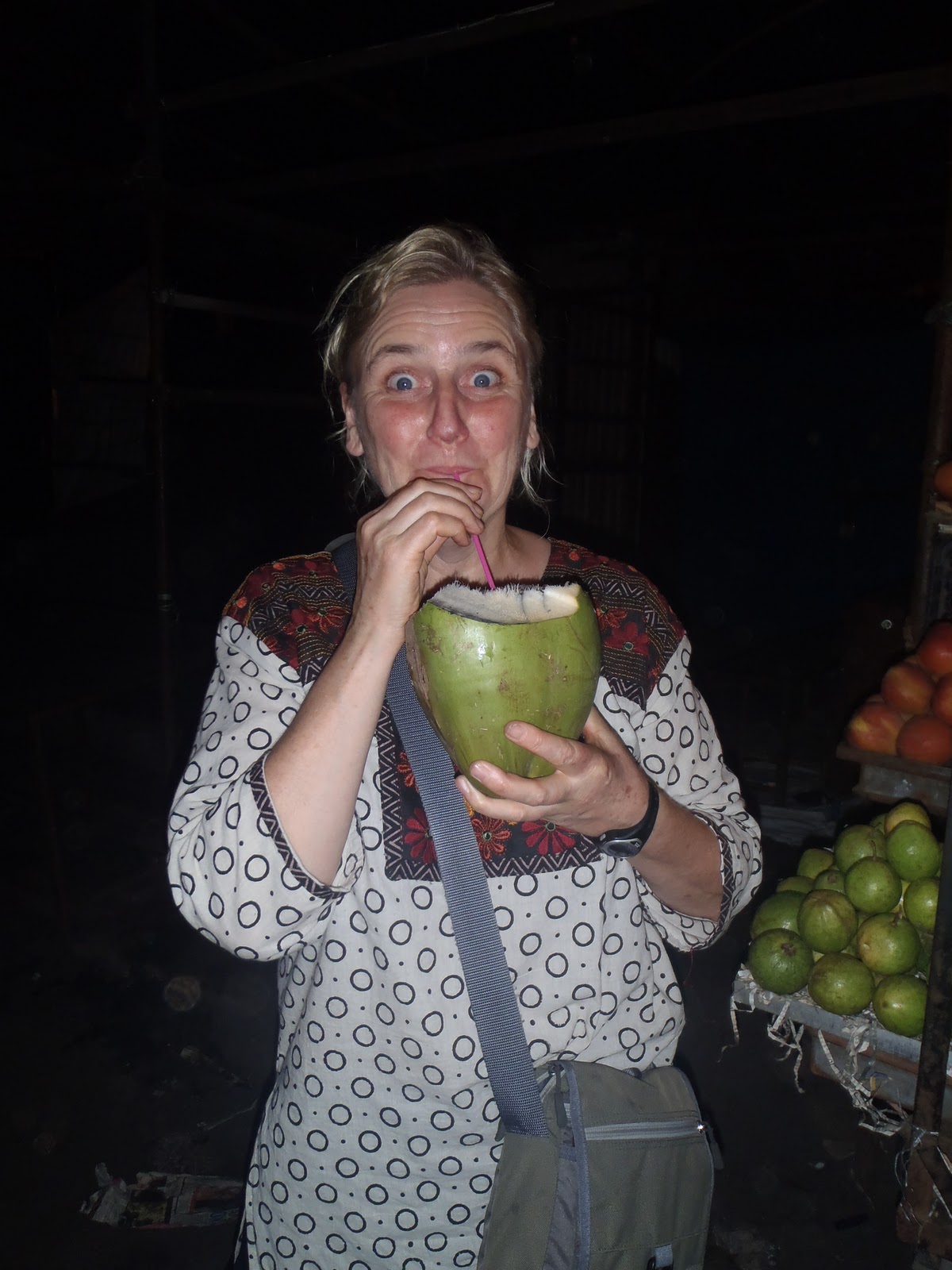
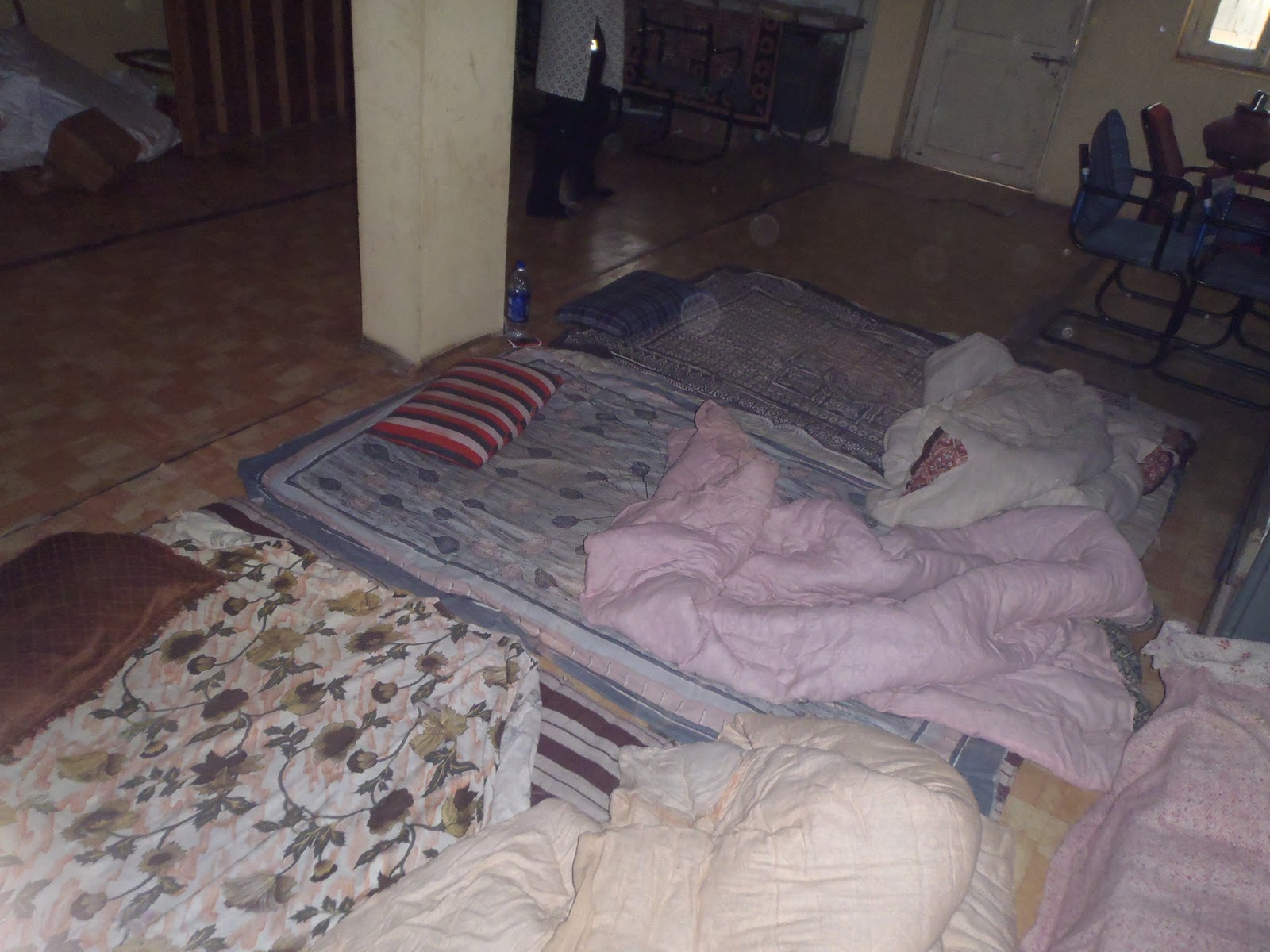
Once we returned to the village of Limkheda, Meryl, Rupinder and I, went strolling around the streets looking for some wonderful fresh fruit to stock up on for dinner. As luck would have it, we happened across some lovely pomegranates, bananas and coconuts which added a delicious and healthy staple to our plethora of candies and snacks which we considered to be our “dinner” for that evening. Given the small size of the village we were staying in, there was no hotel for us so our accommodations for the evening turned out to be the floor of the Utthan office. Until now in my trip I have been undoubtedly spoiled by the luxuries my very top-notch hotels, I now think of this night (and the outing as a whole) as one of the most divergent from my “privileged” experiences in India thus far.


Rupinder and I drinking coconut water on the side of the street in Limkheda


Meryl thoroughly enjoying her coconut


Our washroom for the evening at our night spent at the Utthan office


Gujarati slumber party!

The next day was full of profound, insightful, empowering and disturbing events. While the focus of our first day in the tribal villages was on agriculture and livelihood issues, day two exposed us to a slice of the work Utthan is doing in the area of gender equality, empowerment, conflict transformation and peace and security issues within the Panchmahan district. In 2002, a devastating riot broke out in Gujarat which resulted in the massacre and destruction of Muslims and communities throughout the state. The Panchmahan district was an area particularly targeted during these riots which is the reason why Utthan is now here trying to help these torn and ripped apart communities to heal and rebuild.


At the Utthan office


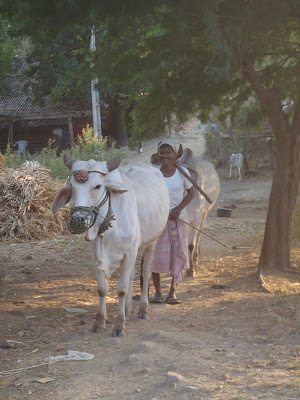
Handsome cows (I come down with a bit of an obsession)


Inside one of the homes in the tribal communities

Since independence in India and the separation of Pakistan in the late 1940’s, there has been ongoing conflicts and struggles between Muslim and Hindu communities, in addition to the many other social divisions of caste, gender and race which further adds to hierarchical structures of power within this diverse and complex country.  The riots in 2002 were an extension of these deep-seated conflicts and have shaped the present-day reality in Gujarat. At our time with Utthan, we were able to learn about some of the aftermaths which have resulted from these riots, largely thanks to Rupinder for her translations to English for the benefit of Meryl and me.


Farmer with his ginger root


Amazing women involved with the Women's Unity Organization  which is making remarkable changes for women in this area


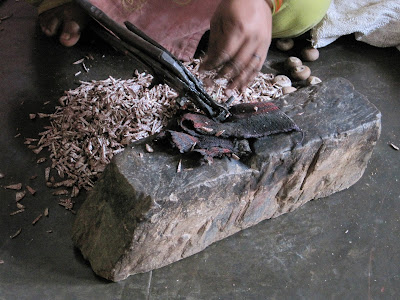
On Saturday, the last home we visited was that of a Muslim family who lives as a minority in a largely Hindu community. Meryl, Rupinder and I were welcomed into the home of this family, along with a woman, Sajida, who works at Utthan. Even though we have been learning about the riots of 2002 and the initiatives and work of multiple NGO’s in this area who are striving to rebuild from the destruction, it was the experience at this home that brought the realities and devastations of these events into context for me. Thanks again to Rupinder’s wonderful aid as a translator, we were able to sit with three remarkable Muslim women who shared their stories of being targets during the riots. Not only was their house burned to the ground along with all of their possessions, these women were forced to run with nothing but their baby’s and clothing on their back and hide themselves to save their lives. The truly incomprehensible atrocities that happened in this riot (particularly to women) shed some disturbing light onto what it must have been like for these women and their families during this time.


Absolutely incredible and inspiring Muslim women in her home, with her family, spending time with us while they chop their beetle-nut


Even though some of the accounts these women spoke of were incredibly difficult to hear and make any sense of given my own personal circumstances, the fact that after only such a remarkably short time together they opened up and shared their stories with us was remarkable. Not only would it be personally difficult to talk about and bring up what must be extremely difficult memories from their past, the political atmosphere being what it still is today makes it difficult (and dangerous) for women to talk about any such abuses. The voice of these strong women sharing stories of what happened to them and to their loved ones during this time was unlike anything I have ever been witness too.

The events and riots of 2002 stemmed from a long history of conflict within this nation and can be related back, in some ways, to the work Gandhi was trying to accomplish for his people and his country. Knowing that the work of Utthan is situated within Gandhi’s philosophies of gender equity and uplifting the underprivileged, considering what we learned out “in the field” with these remarkable women, communities and Utthan staff within such a context has helped my understanding of these circumstances in a much more profound, although more complex, way. 

Tuesday, 15 November 2011

Gandhi and Pampering


Beginning our residency in Ahmedabad this week, the influence of Gandhi in this area has been a re-occurring experience. Gujarat, the state in which Ahmedabad is situated in, is the birth place of Mahatma Gandhi and holds a special place in the events that took place during his lifetime. After Gandhi left South Africa where he worked as a young man, he returned to his home state and took residence in the city of Ahmedabad. Ahmedabad, which is known as being a leader in development, continues to try and realize a Gandhian vision of empowerment for its people.


Yesterday, we had the great opportunity to visit the ashram and university Gandhi established during his time here. Among the many profound insights this visionary was able to contribute to humanity, one has stood out as particularly relevant to my context right now. When we were at Vidyapith, the university he created, the idea of consumption was touched upon in relation to the levels of comfort we’ve become accustomed too. Back in 1909, Gandhi himself made the point that we were “pampering” our bodies. In this day and age, what does “pampering our bodies” mean though and what did it mean then?


At the ashram, Gandhi's bedroom as it actually was

When I first heard this, I immediately knew I was guilty of such indulgence as I do “pamper” myself in many different ways to achieve the state of comfort I've become accustomed to and quite thoroughly enjoy. Being in India just over a week now, it is hard not to notice how little there is for some and how much there is for a few. Coming here as a tourist, I realize how much “stuff” I've brought or gathered along the way (products, medications, electronics, clothing, etc.) as well as all that I have access to, to make sure that I feel comfortable. At the time, everything felt like a necessity, but now I wonder.


Further speculation to this wondering was sparked this evening when we visited the local non-government organization “Centre for Environment and Education” (CEE).  The idea of consumption and development was probed even deeper and placed in a global context that helped bring this idea of “pampering” and comfort into a larger perspective. Essentially there lies the inevitable problem, which we must eventually face, surrounding the fact that ideas of “development” which circulate around the world are not sustainable. This is a critical problem because those who are considered “developed” are living far beyond what is sustainable for our planet and those who aspire to be “developed” want this too.


Beautifully sensuous and artful displays of welcome for us at Gujarat University

Having this global context of sustainability now provided, I find myself coming back to what Gandhi said over a century ago – we are pampering our bodies. In North American lifestyles, there's a portrayal and expectation of indulgence. If we are to set ourselves out a sustainable path however, in what ways would it be possible to reduce our impact on the planet back and would this require less “pampering”? Given the current population being over 7 billion, we should individually be living with a “footprint” of less than 1.8 hectares – Asia currently falls within this but North American’s are utilizing over 8 hectares to allow for our lifestyles. Is it possible then for us to kick some habits and reduce to a sustainable level?


Gandhi's final resting place in Delhi

A few of his many daily visitors

Being a person who knows that I do pamper myself and have expectations of being “comfortable”, what parts would need to changed, altered or given up completely in order to start actualizing such sustainability as well as continue in the Gandhian vision of empowerment? Is this idea of indulgence and “pampering” ourselves to the extremes that we do even the culprit to our disproportionate lifestyles?  What do you think?


Saturday, 12 November 2011

Port of Entry


As my week in Delhi comes to end, these days have shown such a variance in diversity.  From what I’ve seen, Delhi is a city of extremes. At times, the roads and landscape are so well manicured you forget you are even in a foreign country with the scenery seeming so familiar. Then all of sudden, you turn a corner and just as soon as your beginning to feel comfortable, you’re struck by a sudden and extreme shock that demonstrates your naivety in understanding of the realities around you.


One area that has made me feel especially naive has had to do with the bargaining and negotiation of money. Constantly having to go back and forth to try to get fair prices for rickshaws or goods has been an extremely daunting task. Even though I haven’t really had any experiences to prepare me for this, I do not seem to have a clue as to how to effectively go forth anywhere here without practically being ripped off or taken advantage of as the “typical” tourist – which is precisely how I have felt this week.


To be honest however, having a week of tourism, sight-seeing and consuming all the different attractions I can, has been a lovely way to adjust to all of the foreignness I am now immersed in and trying to understand in some sort of meaningful way. While it has had its ups and even the rare downs, this week has been a wonderful introduction to India. The people, the food, the sights, my accommodations and the fabulous company I’ve been fortunate enough to share these experiences with has all exceeded my expectations.


Looking forward to moving on to Ahmedabad in the Gujarat state today; from what I’ve heard, it’s quite different from Delhi and not a typical spot for tourists. Ahmedabad, supposedly being a far more "traditional" state, should provide many more shocking but amazing experiences!

Wednesday, 9 November 2011

The City of Love


Yesterday, Olu and I travelled to Agra to see the famous Taj Mahal and other breathtaking sites. Agra, known as the “City of Love” because of the Taj, is a wonderful city and quite different from the pace Delhi. It was a 4-hour drive to getting there, although we did stop for breakfast at a lovely park where we were also fortunate enough to see some incredible animals.

Breakfast of eggs, spicy potato cake, and sandwiches 

An elephant! I got to pet it :)

Adorable and talented monkey
Once we arrived in Agra, the first place we visited was Sikandra (Akbar’s Tomb). Akbar, who was an Emperor from the mid 1500’s to early 1600’s, commenced the construction of this mausoleum for himself, however, after his death, his son – Jahangir – commenced the construction. The architecture of these buildings is a combination of Hindu, Muslim and Persian.

Olu and I outside the elaborate south gate entrance of Sikandra

Standing outside Akbar's Mausoleum

The Mausoleum

Inside where Akbar's tomb lies
After exploring the grounds of Sikandra, we proceeded further into the city of Agra and made our way towards the Taj Mahal. This experience was absolutely incredible and was the biggest crowd I am yet to see in India. Not only do people all over the world come to visit this incredible ‘World Wonder’, people from all over India travel to visit this most sacred site. Built with all white marble to symbolize peace and inlaid with semi-precious stones which add the incredible details in design, the Taj Mahal is known as the “Temple of Love”. Grief stricken Emperor Shah Jahan had this mausoleum constructed for his third wife after she died giving birth to their 14th child. This most elaborate tomb which took 20 years to construct is a true testament to love.

Entrance gate to the Taj Mahal

Taj Mahal - Can you see me?

Well I can check that off my bucket list 

Olu and I 

Front of the building - if you look closely you can see the calligraphy writing around the edge 

Beautiful - you can see why its one of the Seven Wonders of the World

After leaving the Taj, we had lunch at a wonderful restaurant “Indiana” within Agra, before heading to our next, and final attraction, the Agra Fort.


Olu and I, along with our guide, head into the huge Agra Fort. Over 400 years old, this fort was built by approximately 4 generations spanning 100 years of construction. Used as a site for Emperors, the Agra Fort compliments the Taj Mahal and the two structures are keenly located across the Yamuna River from one another. 

Walking into Agra Fort

Entrance

Palace inside

Another palace inside, along with the wine garden! 


View of the Taj Mahal from Agra Fort

To top off an already wonderful day, Olu and I ran into Joanna, Tali, Warren and Julie just outside the entrance of Agra Fort!! We will all be meeting in Ahmedabad on Sunday to begin our residency, but as fate would have it,  we somehow manage to bump into each other in Agra just days before. What are the odds?

Joanne, Tali, Me, Olu, Warren and Julie